

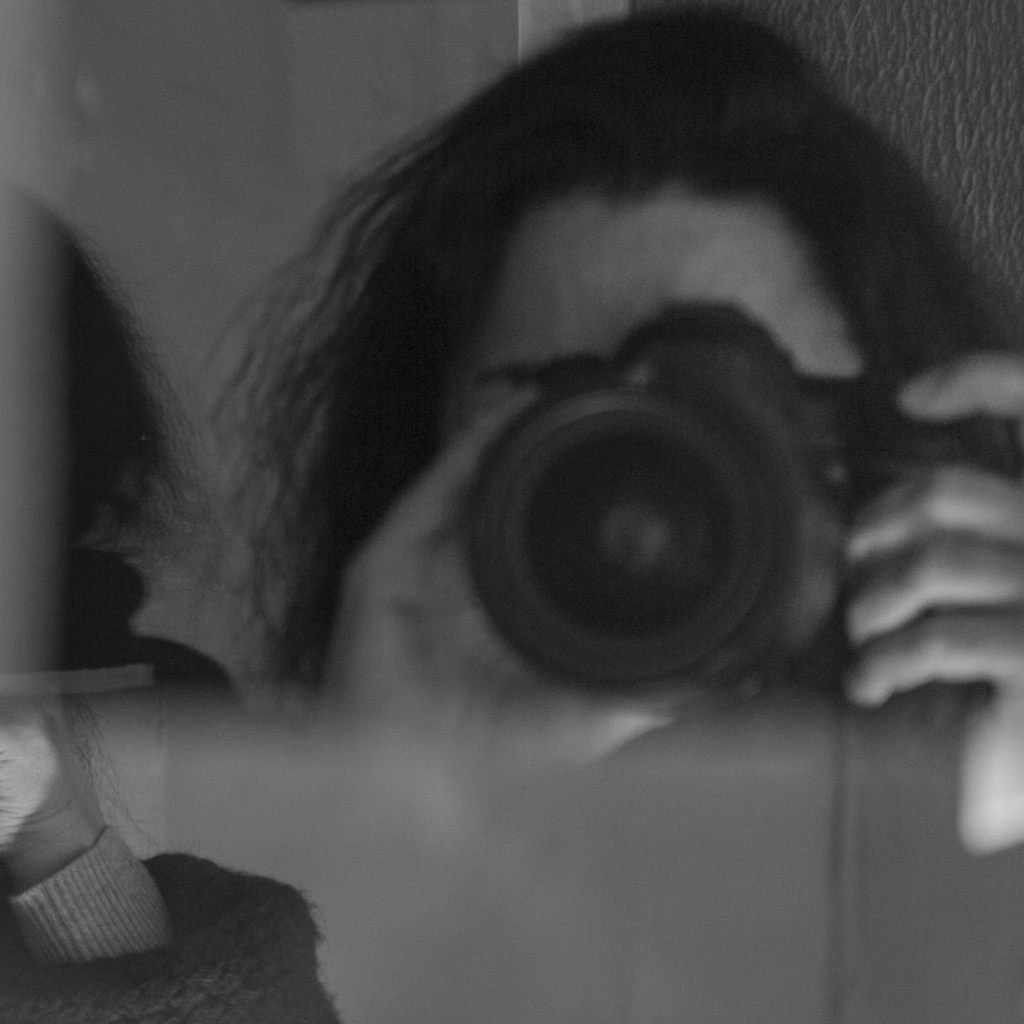
Q: How have your personal experiences, background, or perspective shaped the way you see and photograph the world around you?
Before becoming a photographer, I was an attorney, working on human rights, media and freedom of the press. Photojournalism is somewhat a continuation of my inner quest – the fight against injustice, the defence of freedom, and the search for truth – but through a different language.
In photography, I was naturally drawn to immersing myself in different worlds. The turning point was in Lebanon, where I spent time with Bedouin families displaced from Syria. I
discovered that proximity was essential to the way I understood what I was seeing. The more time I spent with people, the more I could grasp the nuances of their lives, and also question my own perspective and the society I come from. For me, proximity is a form of investigation. It allows me to see the complexity of what I am witnessing in a way I could never fully understand from simply going in and out. I believe it is also a form of respect. This experience shaped the way I work, and I have since continued this approach in the occupied West Bank.
I am drawn to places where the subjects are difficult and where the conversation around them is already very loud (war, occupation, injustice, displacement). I try to enter through a smaller door. I look for what is more intimate, sometimes even ordinary, because I believe these individual stories can connect people to realities that have become so overwhelming that they are difficult to look at or even listen to anymore.
Q: What drew you to enter the PhotoJournalism Prize, and what did it mean to you to have your work recognized by PJP?
I was already familiar with the reputation and credibility of the organisation behind the Photojournalism Prize and with the other competitions it has established over the years. What particularly drew me to PJP was the opportunity to have my work seen by such an exceptional jury, bringing together photographers, editors, curators and journalists whose work I deeply respect. Having photographers such as Paolo Pellegrin and James Nachtwey on the jury made that opportunity especially meaningful to me. Being among the first photographers recognised by the Prize, in its inaugural edition, is a great honour.
Q: Could you take us behind the scenes of your winning series? What story or message did you hope to communicate?
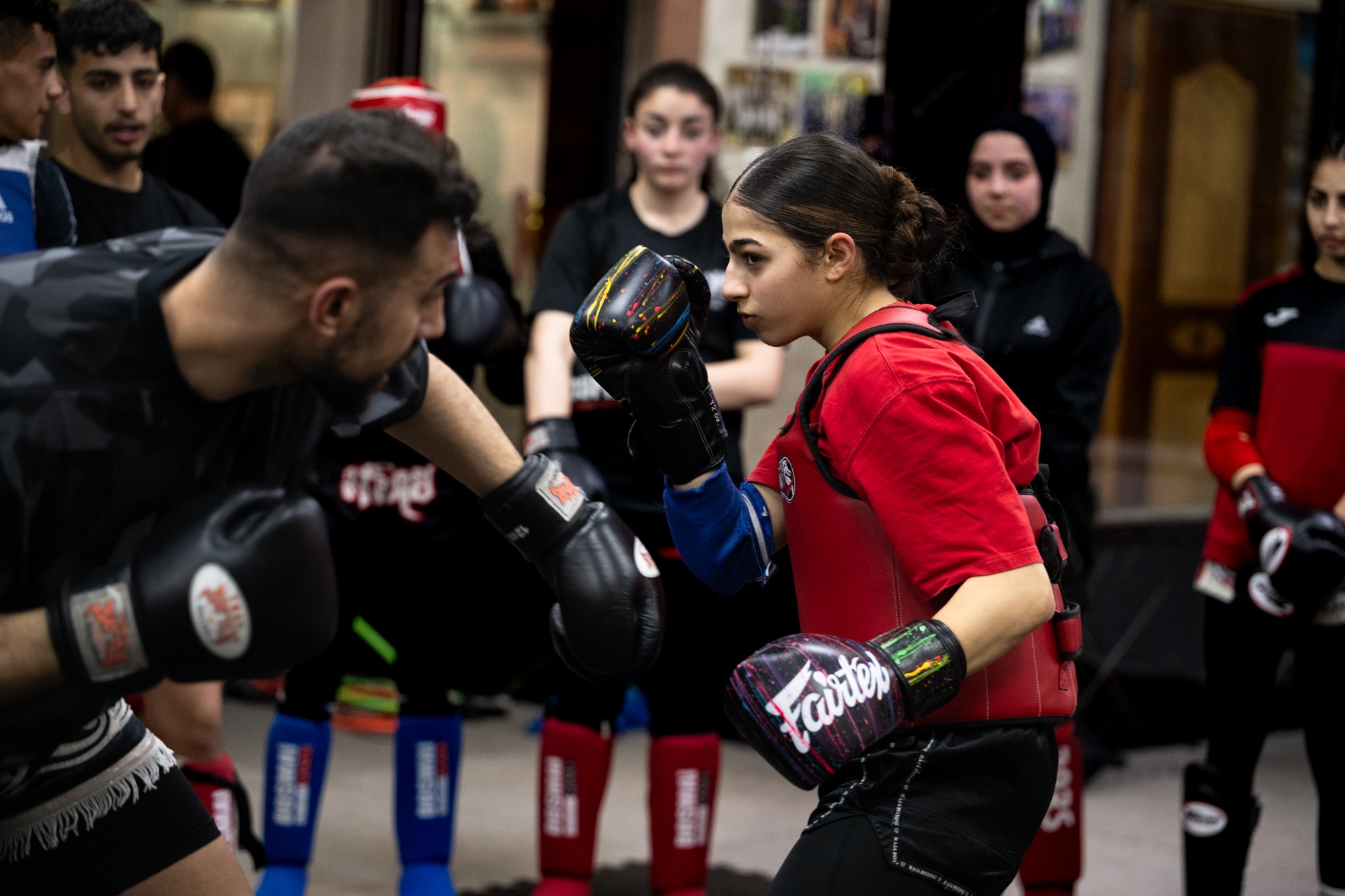
When I first met these kids, I was interested in the fact that boys and girls were training together. I had never seen this in Palestine. They were not only training together, they were sparring with each other, something that challenged societal norms. Then I was mesmerised by their energy, their dedication and the intensity of their training.
Little by little, I discovered their stories. Each of them has their own experience of growing up under occupation. Some have relatives who have been imprisoned or killed. Others live in refugee camps that are regularly raided. Some have to spend hours at checkpoints on their way to training. And yet they keep coming back. Some train twice a day, before and after school. They compete internationally, and both the boys and the girls are winning.
They also told me about their friend and team partner Ammar Hamayel, a 13-year-old champion who was shot in the back and killed by Israeli forces in June 2025. His death had renewed their determination to win for him. I later met his family in his village outside Ramallah, saw his childhood bedroom and his grave, and met his younger brother, who dreams of starting Muay Thai himself. The series is ultimately about these young athletes; what they love, what they work
for and what they dream of.
Q: What do you believe photography can contribute to conversations around global social and environmental challenges? Can a single image genuinely change the way people see an issue?
I believe so. We all have images in mind that stay with us, images that move us or challenge us. Some are so powerful in raising awareness of an issue that they contribute to changing not only conversations, but sometimes even policies.
But I think we are now facing a different and more dangerous challenge. We live at a time when it is easier than ever to manipulate information, while AI makes it increasingly difficult to know what images are real and what images are not. People are, rightfully, becoming more suspicious of what they see. We are heading towards a loss of trust in images. And if you don’t believe in the images that show what is happening in the world, then there cannot be a conversation about anything to begin with. This is why I believe photojournalism matters more than ever. As photojournalists, we are bound to work within the ethics of our profession, to work with honesty and integrity, and I just hope that trust in our work will not vanish.
Q: What continues to drive you as a photographer, and what would you like to challenge yourself with or explore next in your creative journey?
I wouldn’t trade this job for anything. It is a life of adventure and discovery – of the darkest sides of organised societies and structures of power, and of the most beautiful light in human beings; a discovery of others, but also of oneself.
I am driven by the people I encounter and the stories they carry. As a freelancer, I often have to build my stories from the ground up. I am alone on the ground, and access is rarely given to me. I have to find my way in, build relationships and earn people’s trust. Sometimes it takes a long time, and sometimes I wonder if I am completely mad to keep pushing. And then, something opens. An impossible access becomes possible, and one door leads to another. The deeper I go, the more the world opens up, in ways I could never have anticipated. And then, the more I see, the more I know that I don’t know. I want to keep pushing myself towards this unsettling uncertainty, without preconceived ideas and without knowing where things might lead. The moment I think I know enough will probably be the moment I am no longer pushing hard enough.