

Q: How have your personal experiences, background, or perspective shaped the way you see and photograph the world around you?
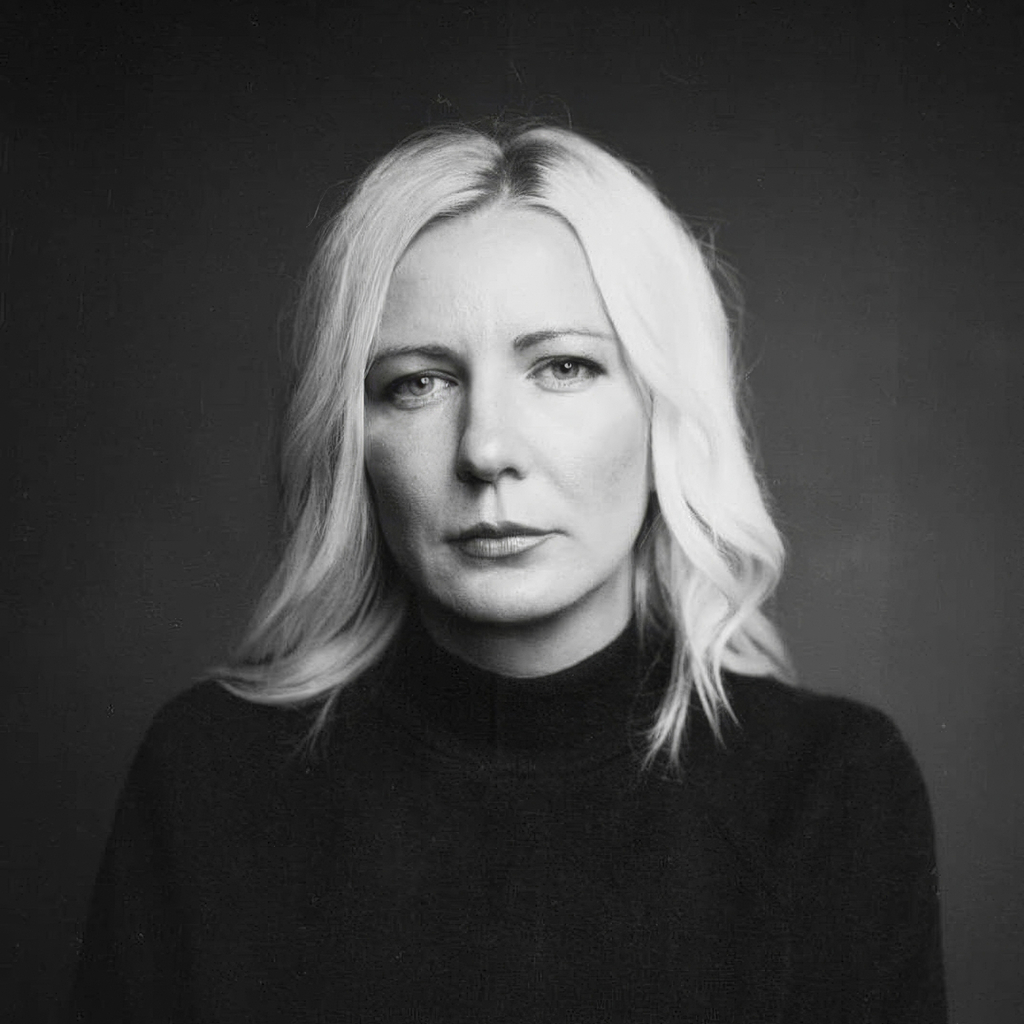
I was born in Donetsk. In 2014, I had to leave my hometown because of the war. I lived in Bucha for several years, and after the full-scale invasion in 2022, I was once again forced to leave my home.
This experience has deeply influenced me and my photography. War is not an abstract concept for me it is part of my own life. Perhaps this is why I am particularly interested in people and in what happens to them after a traumatic event. Not only the moment of catastrophe itself, but what remains afterwards: how a person continues to live, how their relationships with others change, how their memory changes, and how their sense of home, the future, and themselves is transformed.
I don’t see photography only as a way of documenting what is happening. For me, it is a way of looking closely at a person and trying to understand their experience. Portraiture is especially important to me. When we talk about war, it is very easy for a person to become a number, a statistic, or an illustration in the news. A portrait allows us to return that person their individuality.
Q: What drew you to enter the PhotoJournalism Prize, and what did it mean to you to have your work recognized by PJP?
I decided to enter the PhotoJournalism Prize because I wanted Stolen Spring to go beyond the Ukrainian context and reach an international audience. This project is very personal to me, but at the same time, the story I am telling is not only about Ukraine. It speaks about loss, waiting, love, uncertainty, and about life continuing despite war. It was important to me that viewers from other countries could see behind these photographs not simply the consequences of the war in Ukraine, but a specific person and their personal story.
The recognition from PJP is very meaningful to me because when you work on a personal and emotionally difficult project for a long time, you are not always sure whether you have managed to communicate what you really wanted to say. When a project receives this kind of recognition, you realize that it has moved beyond your own experience and has been heard by other people. I am very grateful to the PJP jury for seeing this work and giving it the opportunity to meet a new audience.
Q: Could you take us behind the scenes of your winning series? What story or message did you hope to communicate?
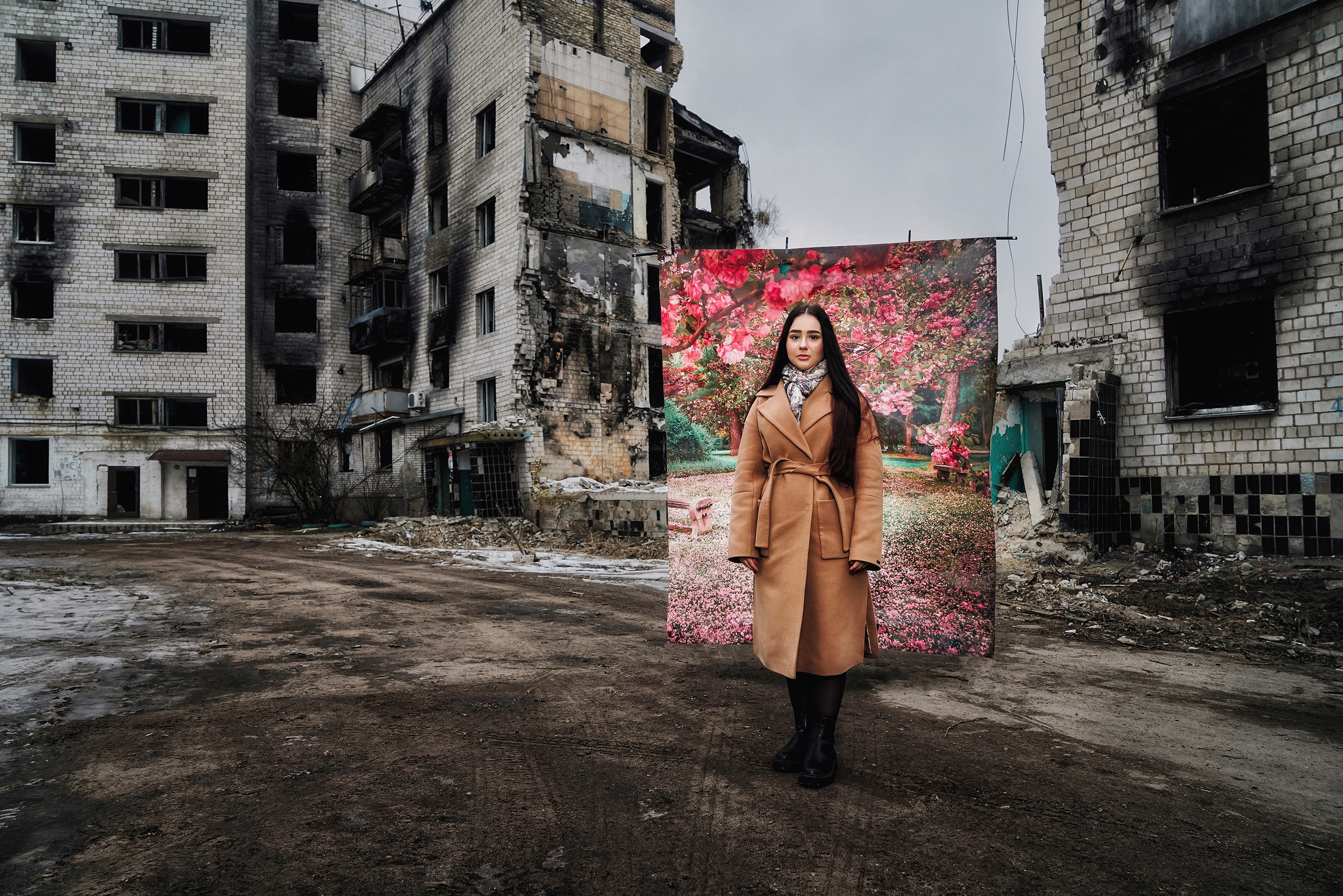
Stolen Spring emerged from my observation of how war becomes part of everyday life. I live in Bucha and work in Irpin, and I see destroyed cities and people trying to rebuild their lives. It was important to me to speak about this not through images of destruction, but through people.
The subjects of the series are women who have suffered as a result of Russian aggression. Through their personal stories, I wanted to speak about what is happening to Ukraine as a whole about loss, destruction, displacement, but also about the human ability to rebuild. The project is based on a historical dialogue with photographs by the Polish photographer Michael Nash, who photographed the destroyed city of Warsaw in 1945–1946, using a decorative backdrop to conceal the ruins. I used a similar approach: a beautiful, almost festive backdrop with the reality of war behind it. This contrast reflects our lives today we continue to work, take photographs, make plans, but the war is still there.
The title Stolen Spring refers to the spring during the occupation. People hardly noticed how it passed: chestnut trees and lilies of the valley were blooming, birds were returning, while they were simply trying to survive. Along with their homes, loved ones, work, and sense of security, their time was also stolen from them. A stolen spring is a stolen part of life.But this is not only a story about loss. It is a story about me, about the people around me, and about Ukraine as a whole about what has been taken from us, but also about what we are trying to preserve and rebuild. Each photograph is a personal tragedy, but at the same time, it is the story of a survivor and a hope that Ukraine will rise from the ruins.
Q: What do you believe photography can contribute to conversations around global social and environmental challenges? Can a single image genuinely change the way people see an issue?
I think photography can make a global issue personal. When we talk about war, displacement, climate change, or other global challenges, we often perceive them through numbers and statistics. But behind every number there is a particular person and their life.
Photography can give that person back their face and individuality. It can encourage the viewer not simply to learn about an issue, but to stop and look at it through a human story. I don’t think a single photograph can change the world or solve a problem. But it can change the way one person sees something make them stop, feel, think, and ask a question.
And sometimes that is where understanding begins. That is why I believe the power of photography is not necessarily in providing an answer or a solution. Sometimes its role is simply to make a person see, feel, and not look away.
Q: What continues to drive you as a photographer, and what would you like to challenge yourself with or explore next in your creative journey?
What continues to drive me is my interest in people and in stories that exist beyond what is immediately visible. I am interested not only in what happens to a person at the moment of a historical event, but also in what happens to them afterwards.
What remains after war? How does a person rebuild their life? How do they live with memory and loss? How does their relationship with home, the past, and the future change? How does a person continue to exist after the life they once knew has ended? I constantly return to these questions in my work. At the same time, I want to develop my visual language and not limit myself to photography alone. I am interested in combining documentary photography with video, sound, installation, and other forms. I continue to work with the stories of people affected by the war in Ukraine because I feel it is important to preserve them. But it is important to me not simply to document what is happening.
Perhaps most importantly, I want to continue asking questions through photography rather than simply giving ready-made answers. I think that is what keeps me moving forward.