

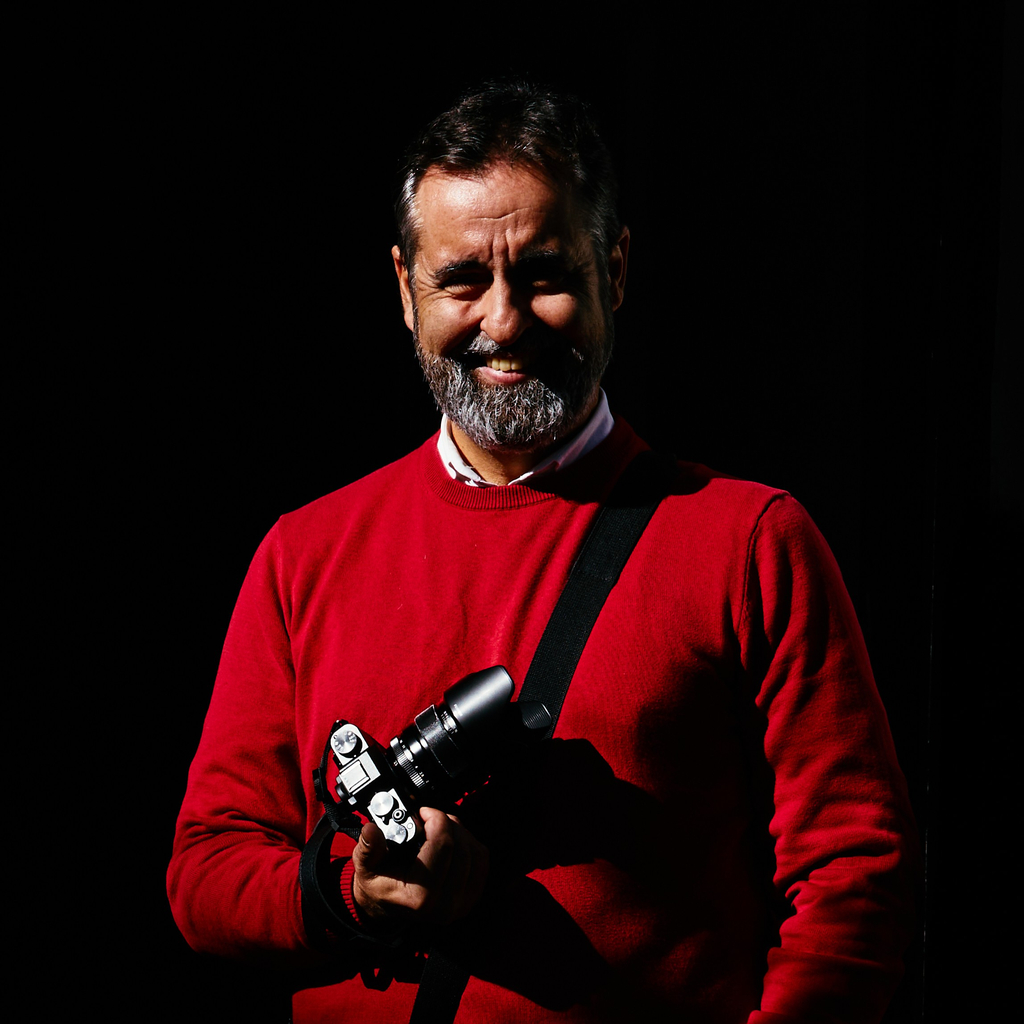
Q: How have your personal experiences, background, or perspective shaped the way you see and photograph the world around you?
Ever since I was a child, my teachers always told my parents that I was a highly attentive and observant boy. I grew up in an environment where emotional bonds and security were complex—a reality that has shaped my personality to this day, unconsciously driving me to seek order, control, and structure as protective mechanisms. Perhaps it was during those early encounters with photography in my adolescence that I discovered the perfect medium to channel my inner world.
Many people find enjoyment in people-watching; ultimately, photojournalism, documentary, and street photography are visual testaments of people observing other people. Within this constant observation, one realizes that the possibilities on the street—out in the world—are infinite. You can never truly anticipate what might be possible, and that is precisely when magic occasionally manifests.
Consequently, my photography has transformed into a space of constant negotiation. I venture out with the curious gaze of a child, almost obsessively focused on light and geometry. I begin to engage with my surroundings through mindfulness, attempting to impose an aesthetic order on everyday chaos to feel secure. However, the true fulfillment begins when I compel myself to relinquish that control through the viewfinder, allowing that unforeseen magic to intervene. It is a confluence of an intellectual act and the surrender to what moves me—emotions that I am sometimes able to recognize, and other times not—guided purely by instinct.
The camera serves as the bridge that allows me to connect deeply with my environment, rescuing those “invisible” moments where the imperfection of life and the light of Southern Spain coincide for a split second. My way of seeing the world is that of someone who allows himself to be carried by his emotions; fundamentally, it is a way of reconnecting with that child to heal his own vulnerability.
Q: What drew you to enter the PhotoJournalism Prize, and what did it mean to you to have your work recognized by PJP?
What primarily motivated me to participate in the Photojournalism Prize was the contest’s own founding philosophy: the fierce defense of photography as a record of truth and an indispensable bridge for human connection. Projects like “The Invisible Rite” demand a long period of solitary maturation, seeking to capture the coexistence of cultural tradition and the invisible margins of daily life. When I discovered an international platform like PJP, committed to elevating narratives that provide context and humanity, I felt it was the natural home where my work should be shown and challenged.
For such an intimate and local series to be recognized with the first prize in the Arts & Culture category has marked a deeply emotional milestone in my career. First and foremost, because of the technical and narrative rigor demanded by an international jury of this caliber, which included names that have long been benchmarks for me. Knowing that “The Invisible Rite” moved and convinced based solely and exclusively on the strength of its images and the truth of its discourse is the most honest validation an author can receive. For me, this award is confirmation that the street speaks a universal language and that, when you manage to connect with your own vulnerability, you are capable of touching that of any viewer, anywhere in the world.
Q: Could you take us behind the scenes of your winning series? What story or message did you hope to communicate?
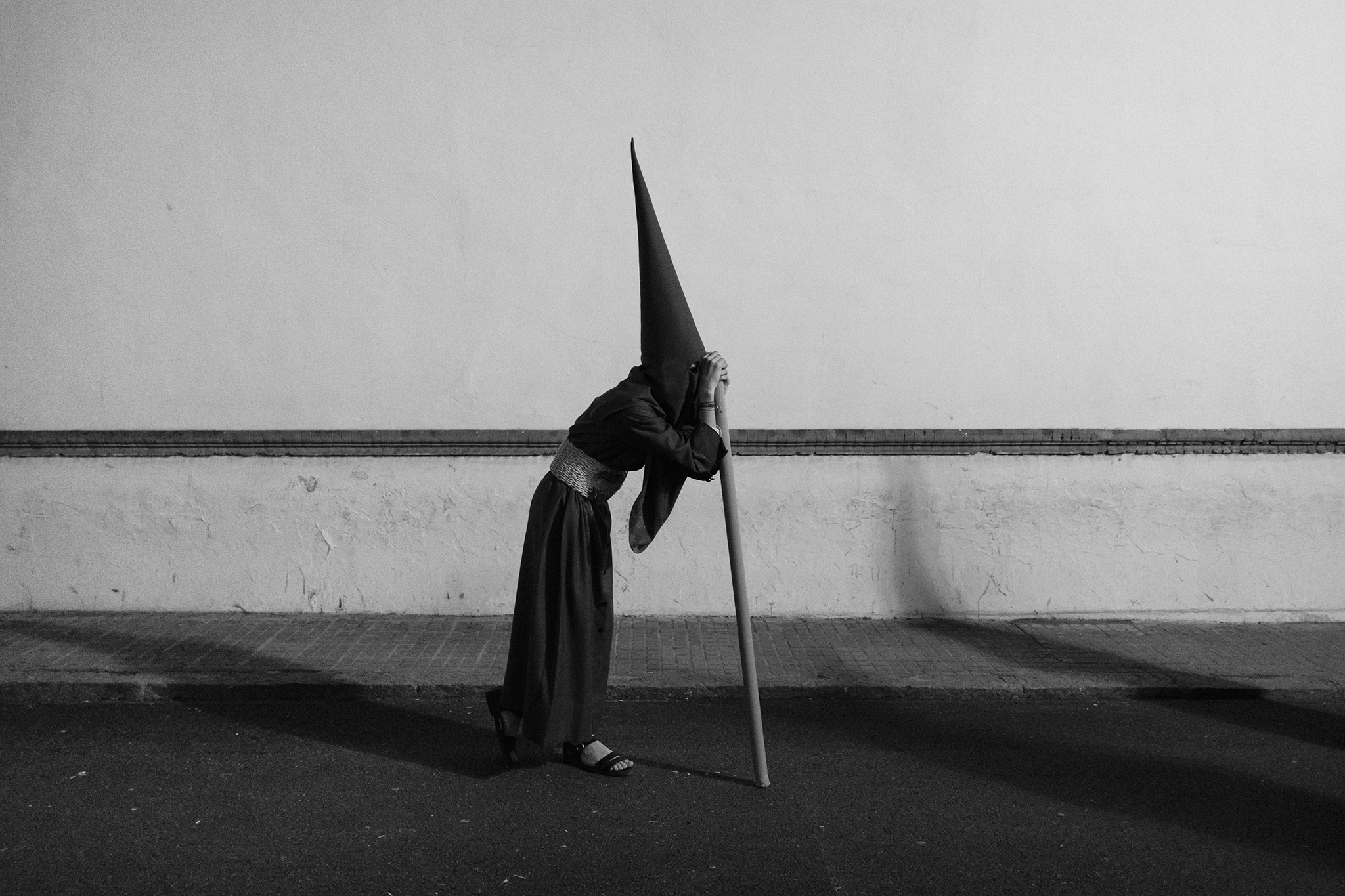
Behind the camera of “The Invisible Rite,” there are no major technical setups, staged scenes, or, naturally, any post-processing manipulation; there are endless hours of solitary walking, patience, and an absolute quest to blend in. I work with minimal and highly discreet equipment, which allows me to disappear into the environment and become just another invisible element of the scene. The series came to life by observing how collective identities and rituals, so deeply rooted in our culture, manifest not only during grand solemn moments or under the spotlight of celebration, but in the spaces of transition. I was interested in capturing the “before” and “after”: the stillness of an empty street after a procession has passed, the weary gesture of a person in the shadow of an alleyway, or the geometry of silence that arises when the lights of the great tradition fade.
The message I hoped to convey goes beyond mere anthropological documentation. I wanted to show that the true rituals that sustain us as human beings often occur in the absolute privacy of daily life. In an overstimulated and fast-paced world, these images are an invitation to pause and look at the mystery inhabiting the ordinary. On a personal level, every photograph in this series was an attempt to find my own order within the disorder of the street; capturing that perfect light outlining an anonymous silhouette was my way of seeking certainty. Through “The Invisible Rite,” I hope the viewer not only witnesses a cultural tradition but feels that atmosphere of contemplation, discovering themselves connected to the quiet humanity of the subjects populating my frames.
Q: What do you believe photography can contribute to conversations around global social and environmental challenges? Can a single image genuinely change the way people see an issue?
On a global scale, photography possesses the unique capacity to contribute two elements that are increasingly scarce in the era of overinformation: pause and empathy. In an environment saturated with statistical data and fleeting headlines, figures regarding social or environmental challenges often desensitize us. Documentary photography humanizes the statistic; it transforms an abstract problem into a face, a concrete story, and a tangible reality. Its value lies not merely in documenting a fact, but in its power to compel the viewer to pause, to observe with mindfulness, and to connect emotionally with realities that might otherwise feel foreign or distant.
Regarding whether a single image can truly alter how people perceive a problem, I firmly believe it can, though not in isolation. An iconic image does not change the world by magic, but rather because it acts as an irreversible catalyst. It functions as a mirror that condenses the urgency of an era and shatters our indifference. A single photograph can be the starting point that opens a debate, awakens a dormant conscience, or gives a face to an invisible crisis. It does not solve the problem on its own, but it holds the power to plant an uncomfortable question in the viewer’s mind—and that is, inevitably, the very first step toward any real change.
Q: What continues to drive you as a photographer, and what would you like to challenge yourself with or explore next in your creative journey?
What continues to motivate me today is, paradoxically, the certainty that I will never know everything about the street or about human nature. Every time I head out with my camera, I still feel that thrill of uncertainty—the excitement that around any corner, something extraordinary and unrepeatable might happen. Photography has taught me to live in the absolute present, and that capacity for wonder is an engine that never stops. Moreover, knowing that through my gaze I can help others to pause and find beauty or contemplation in daily life is a privilege that renews my commitment to the craft every single day.
As for new challenges, I am deeply interested in moving toward long-term projects where I can forge an even closer bond with the environments I portray. I want to step away from immediacy and explore slower, more deliberate narratives, deepening my focus on memory, territory, and the anthropology of the everyday—perhaps through the photobook format as a self-contained body of work. My greatest creative challenge right now is to continue stripping my photography of artifice and that old need for absolute technical control; I want to embrace mistake, chance, and intuition in an even more radical way. I aspire for my images to become less of an intellectual act and more of a direct reflection of the very pulse of life.